

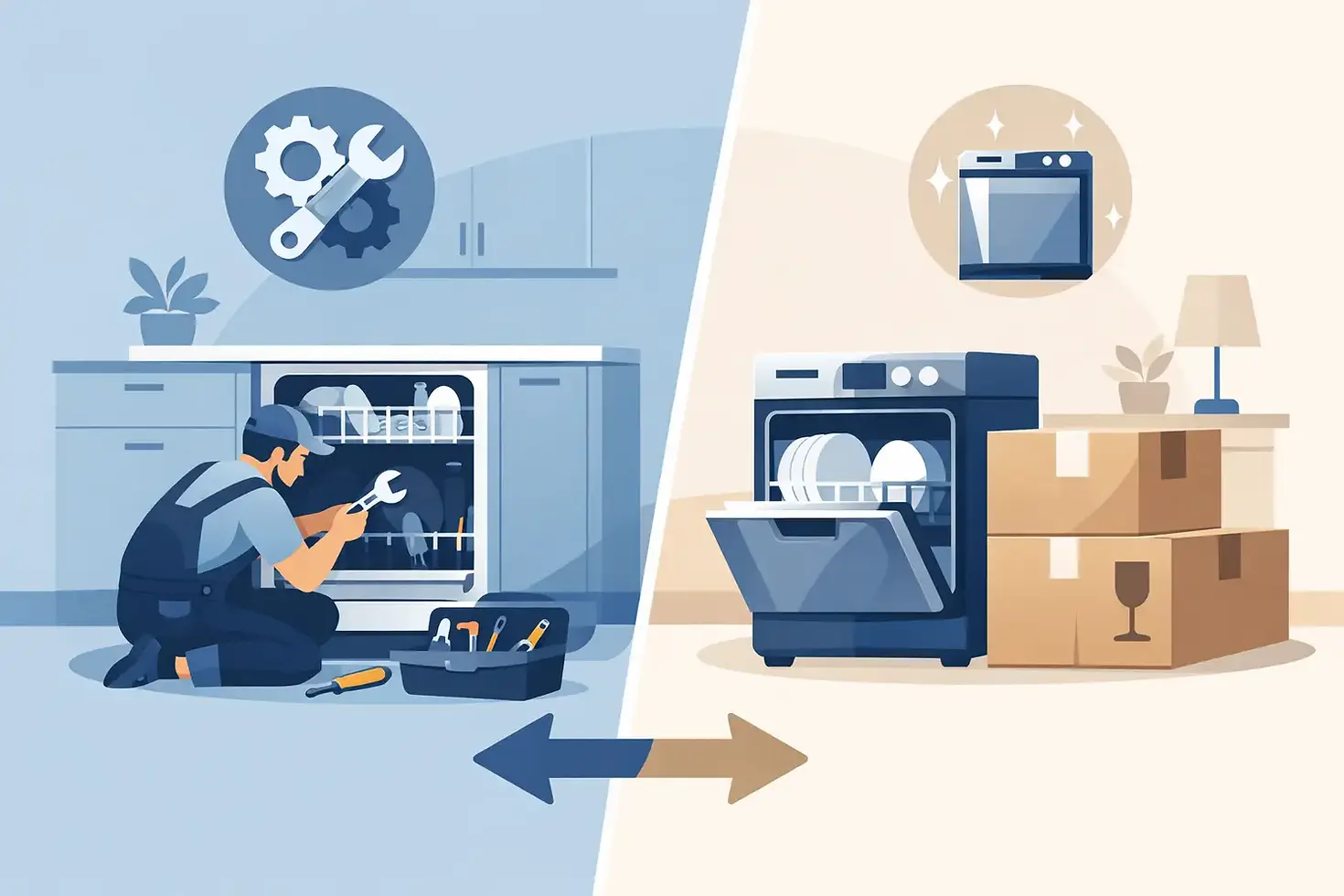
Repairing Dishwasher Versus Buying New: Decide

A dishwasher that quits halfway through a busy week creates an immediate problem: dishes pile up, schedules get tighter, and replacing the whole appliance can feel like the fastest answer. But repairing dishwasher versus buying new is not always a simple price comparison. A failed part may be a practical repair, while repeated breakdowns or major leaks can signal that replacement makes better sense.
For homeowners across the Greater Kansas City area, the right choice usually comes down to the dishwasher's age, the specific problem, the expected repair cost, and how well the appliance has performed overall. A professional diagnosis gives you the information to make that call without guessing or spending money too soon.
Repairing Dishwasher Versus Buying New: Start With the Problem
Not every dishwasher failure means the appliance is at the end of its life. Many common issues are caused by parts that can be replaced without replacing the entire unit. A dishwasher that will not drain may have a worn drain pump, a blockage, or a problem with the drain hose. Dishes that come out dirty could point to a clogged spray arm, circulation pump issue, detergent dispenser problem, or water-temperature concern.
Other repairable issues include a broken door latch, faulty heating element, damaged rack, leaking door gasket, bad float switch, or an electronic control problem. These repairs vary in cost, but many can restore dependable operation for years when the dishwasher is otherwise in good shape.
The key is finding the actual cause. For example, a dishwasher that does not start could have a simple latch issue, but it could also have a failed control board. A leak might come from a replaceable seal, or it might reflect corrosion in the tub. Those are very different situations, which is why an in-home diagnosis is more useful than choosing based on symptoms alone.
Age Matters, but It Is Not the Whole Story
Most dishwashers last about 10 to 15 years, depending on the brand, model, installation quality, water conditions, and how heavily the appliance is used. A dishwasher that is five or six years old with its first significant repair is often a strong candidate for repair. It has likely used only part of its expected service life, and a targeted fix may be far less expensive than purchasing and installing a replacement.
Once a dishwasher reaches 10 years or more, the decision deserves a closer look. Parts may still be available, and a straightforward repair can still be worthwhile. However, older appliances are more likely to develop multiple issues in a short period. If the circulation pump has failed after recent problems with the latch, racks, and drain system, putting more money into the same unit may not provide much peace of mind.
Age should be considered alongside reliability. A well-maintained 11-year-old dishwasher with one clear repair need may be a better bet than a poorly performing seven-year-old model that has needed repeated service.
Compare the Repair Cost With the Full Replacement Cost
It is tempting to compare a repair estimate only with the price tag on a new dishwasher. The more useful comparison is between the repair and the complete cost of replacement. A new appliance can also involve delivery, installation, removal of the old unit, possible plumbing or electrical updates, taxes, and time spent selecting a model that fits your cabinet opening.
As a general rule, repair is often sensible when the cost is significantly less than half the total cost of a comparable replacement and the dishwasher has not been breaking down regularly. This is not a hard rule. A repair near that threshold can still be reasonable if the appliance is relatively new, matches your kitchen, and has otherwise been dependable.
On the other hand, a costly repair on an older unit may only postpone a larger expense. If a major motor, tub, or control system failure is paired with an aging dishwasher and a history of service calls, replacement may offer better long-term value.
A trustworthy technician should explain the issue, the likely repair, and the practical trade-off. Homeowners should never feel pressured to replace an appliance that can be repaired reasonably, but they also deserve an honest answer when a repair is unlikely to hold up.
When Repair Usually Makes Sense
Repair is often the best route when the dishwasher is under 10 years old, the problem is isolated, and the appliance has been cleaning well before the failure. It also makes sense when the issue involves a common service part rather than structural damage.
Consider repair when the dishwasher has a failed pump, heating element, latch, dispenser, gasket, valve, switch, or rack component. These parts can fail through normal use and do not necessarily mean the rest of the machine is worn out. A professional repair can restore the convenience your household relies on without the disruption of shopping, delivery, and installation.
Repair can be especially appealing if your dishwasher fits a custom cabinet opening or matches other appliances in the kitchen. Replacing it may require more than swapping one machine for another, particularly in older homes where dimensions and connections are less predictable.
Signs It May Be Time to Buy a New Dishwasher
Some issues should make homeowners pause before approving another repair. A cracked or heavily corroded tub can lead to ongoing leaks and is generally not a simple fix. Significant water damage around the dishwasher, recurring leaks, or severe rust can also make replacement the safer choice.
Frequent breakdowns are another warning sign. One repair is normal ownership. Several unrelated repairs over a short period can mean multiple systems are nearing the end of their service life. If the dishwasher is loud, leaves dishes dirty, fails to dry properly, and now has a major mechanical issue, a new appliance may be more dependable.
Replacement can also make sense when an older dishwasher uses noticeably more water or electricity than a newer model, especially for a large household that runs it daily. Efficiency is a benefit, but it should not be the only reason to replace a working appliance. The savings from a newer model may take time to offset the purchase and installation cost.
Do Not Overlook Installation and Home Factors
Before choosing a new dishwasher, think about the conditions around the current one. A dishwasher that has leaked may need the floor, cabinet base, supply line, drain connection, or shutoff valve inspected. Installing a new unit without addressing a plumbing issue can create the same trouble again.
Hard water can also affect dishwasher performance over time. Mineral buildup may reduce cleaning power and strain components, while food debris and improper detergent use can lead to drain and wash problems. These conditions do not always require replacement. In many cases, correcting the cause and repairing the failed part protects the appliance going forward.
For renters and property owners, consider who will use the dishwasher and how quickly dependable operation is needed. A repair that gets the kitchen back to normal promptly may be the practical choice, while a unit with a pattern of failures can create repeated inconvenience for everyone in the home.
Get a Clear Diagnosis Before You Spend
A dishwasher can look finished when it is actually facing a manageable repair. It can also appear to have a minor issue while hiding a larger mechanical or structural problem. That is why a diagnosis should come before a replacement decision.
Arrowhead Appliance Repair helps Greater Kansas City homeowners understand what is wrong, what it will take to fix, and whether repair is a sound investment. The goal is to get your home running normally again with a solution that fits the appliance and your budget.
If your dishwasher has stopped draining, started leaking, quit heating, or simply is not getting dishes clean, do not assume replacement is the only answer. A straightforward repair may be all that stands between a frustrating pile of dishes and a working kitchen again.


Comments