

What Causes Refrigerator Water Leaks?

A puddle in front of the fridge usually shows up at the worst time - right before work, after a grocery run, or when you are already dealing with a full kitchen. If you are wondering what causes refrigerator water leaks, the answer can be anything from a simple blockage to a part that is starting to fail. The key is figuring out whether the leak is harmless condensation, a maintenance issue, or a sign your refrigerator needs repair.
What causes refrigerator water leaks most often?
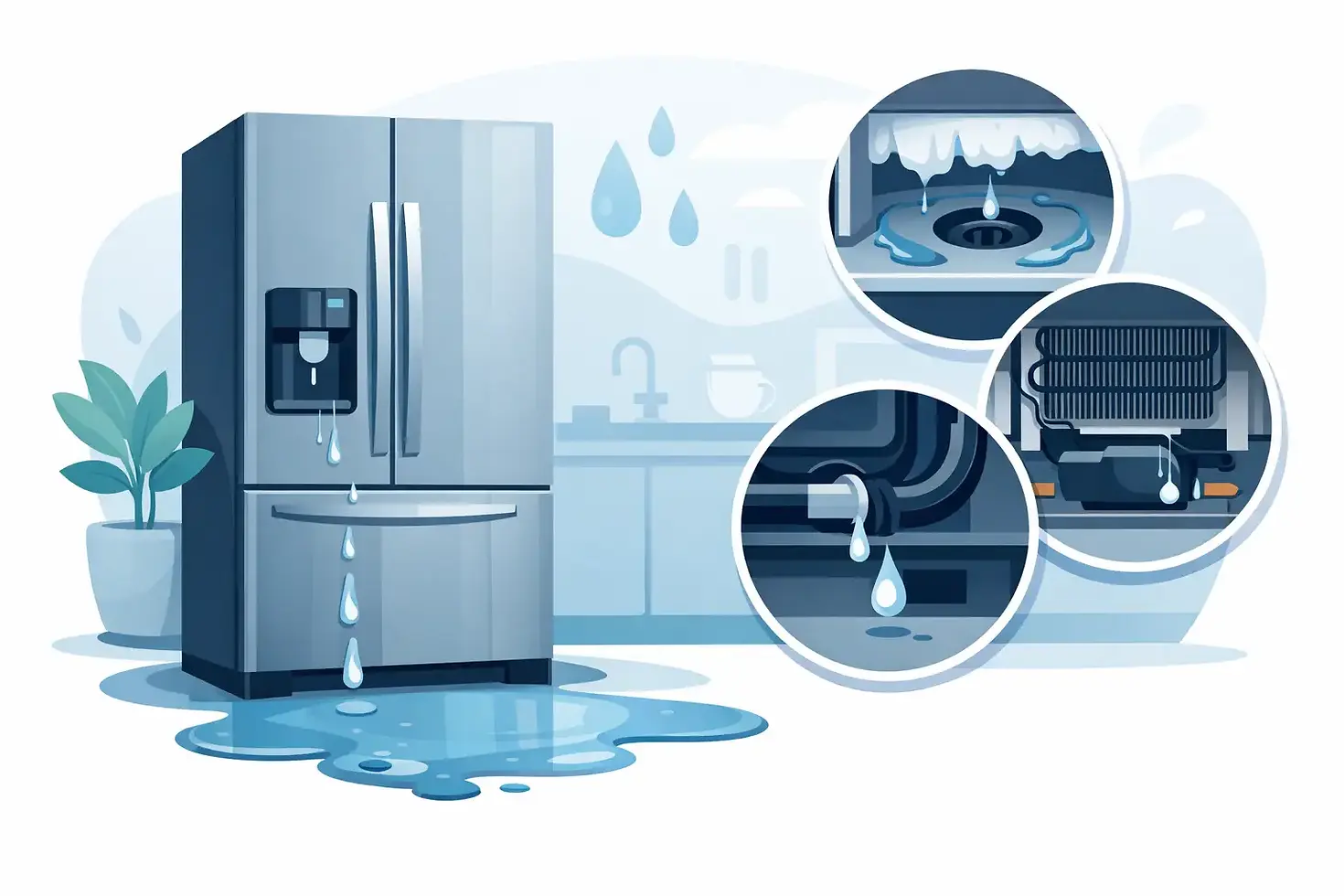
In most homes, refrigerator leaks come from one of a handful of common problems. A clogged defrost drain is one of the biggest culprits. During the normal defrost cycle, moisture is supposed to drain away through a small tube. When that tube gets blocked by food debris, ice, or grime, water backs up and ends up inside the refrigerator or on the floor.
A damaged or loose water supply line is another frequent cause, especially on refrigerators with ice makers or water dispensers. If the line has a crack, a weak connection, or wear from years of vibration, water can slowly drip behind the unit and spread across the kitchen floor before you even notice where it started.
Then there is the drain pan. Refrigerators are designed to collect and evaporate small amounts of water in a pan underneath the appliance. If that pan is cracked, out of position, or overflowing because something else is wrong, water can escape and pool under the fridge.
Leaks inside the refrigerator
When water is collecting under the crisper drawers or along the back wall inside the fresh food section, the defrost drain is usually the first thing to suspect. This is especially common if you also notice a sheet of ice forming at the bottom of the freezer or damp spots that keep coming back after you wipe them up.
It can also happen when door gaskets are not sealing well. Warm, humid air gets into the refrigerator, creates excess condensation, and that moisture has to go somewhere. Over time, what looks like a leak may really be a moisture problem caused by worn seals, doors left slightly open, or food packages blocking the door from closing all the way.
In some cases, the temperature setting plays a role. If the refrigerator is running too cold, water can freeze in the wrong place and then melt later, creating an intermittent leak that seems hard to trace. That is why the source is not always as obvious as the puddle itself.
What causes refrigerator water leaks from the freezer?
A freezer leak often points back to the same drainage system. When the defrost drain freezes over, melting frost has nowhere to go. Instead, it collects at the bottom of the freezer, turns into ice, and eventually spills out when it melts.
Ice maker issues can also create freezer leaks. A fill tube that is misaligned, partially frozen, or cracked can send water where it does not belong. Sometimes the ice maker overfills because of a faulty inlet valve, and that extra water ends up dripping into the freezer compartment or onto the floor.
This is one of those situations where the symptoms can overlap. You may think the appliance is leaking from the door, but the actual problem starts in the back panel or water line system. That is why repeated leaking usually needs a proper diagnosis instead of guesswork.
Water line and inlet valve problems
If your refrigerator has a water dispenser or ice maker, the external water connection deserves attention. The supply line can kink, rub against the wall, loosen at the fitting, or simply age out. Even a very small drip can create a surprising amount of water over the course of a day.
The water inlet valve is another possible trouble spot. This valve controls the flow of water into the refrigerator. When it starts to fail, it may not close properly, which can lead to overfilling, dripping, or inconsistent ice production along with leaks. In some cases, mineral buildup or internal wear is the reason. In others, the valve body itself develops a crack.
These parts are not always easy to inspect without pulling the refrigerator out and working in a tight space. For many homeowners, that is the point where a repair call saves time and prevents floor damage.
Less obvious reasons your fridge may be leaking
Not every refrigerator water leak comes from a broken part. Sometimes the issue is tied to how the appliance is installed or used.
If the refrigerator is not level, water may not flow to the drain system correctly. That can cause moisture to collect where it should not. A slightly uneven floor or recent movement of the appliance can be enough to create the problem.
High humidity in the kitchen can also make a refrigerator seem like it is leaking. On especially humid days, condensation can build up faster than usual, particularly around doors and dispenser areas. That does not always mean a repair is needed, but if the amount of water is more than occasional moisture, there may be an underlying seal or airflow issue.
A blocked drain pan area from dust, pet hair, or debris underneath the unit can contribute too. Refrigerators need proper airflow around certain components to evaporate normal moisture. When that process is disrupted, water may linger and eventually spill.
When a leak is probably a simple fix
Some refrigerator leaks are caused by basic maintenance issues. If a container has spilled, a door was left cracked overnight, or the drain opening is visibly blocked by debris, the solution may be straightforward. Cleaning up the moisture, checking food placement, and making sure the doors close tightly can sometimes stop the problem.
It is also worth checking whether the water filter was recently replaced. An improperly installed filter can cause dripping or poor water flow that leads homeowners to think the refrigerator itself is failing. Reseating the filter may solve it.
That said, a one-time drip is different from a recurring puddle. If the water keeps coming back, there is usually a mechanical or drainage issue behind it.
Signs the leak needs professional repair
A recurring leak is more than a nuisance. Water can damage flooring, warp cabinets, and create safety hazards in a busy kitchen. If you notice water under the refrigerator more than once, ice building up in unusual places, weak ice production, or dampness behind the appliance, it is smart to have the unit checked before the problem gets worse.
Leaks tied to internal tubing, the inlet valve, the defrost system, or hidden drain problems often require disassembly and testing. This is where experience matters. The symptom you see on the floor is not always where the failure starts.
For homeowners in the Kansas City area, that usually means balancing two priorities - getting the kitchen back to normal quickly and avoiding an unnecessary replacement. In many cases, a refrigerator that is leaking can be repaired without replacing the whole appliance, as long as the cause is identified early.
How to reduce the chance of future leaks
A little upkeep goes a long way with refrigerators. Keeping door gaskets clean helps maintain a good seal. Replacing water filters correctly and on schedule can prevent flow issues. Making sure the appliance is level and not crammed too tightly against the wall helps it run as designed.
It also helps to pay attention to small warning signs. If you hear unusual buzzing near the water valve, notice slower ice production, or see frost building up where it normally does not, those are clues worth addressing before a leak becomes obvious.
At Arrowhead Appliance Repair, we see this all the time: a homeowner spots a small puddle, dries it up, and hopes it was a one-off. Sometimes it is. But when it is not, catching the problem early usually means a simpler repair and less disruption at home.
A leaking refrigerator does not always mean major trouble, but it rarely fixes itself. If the puddle keeps returning, the best next step is to treat it like the warning sign it is and get the cause pinned down before it turns into a bigger mess.


Comments